
The birth of a Scottish master
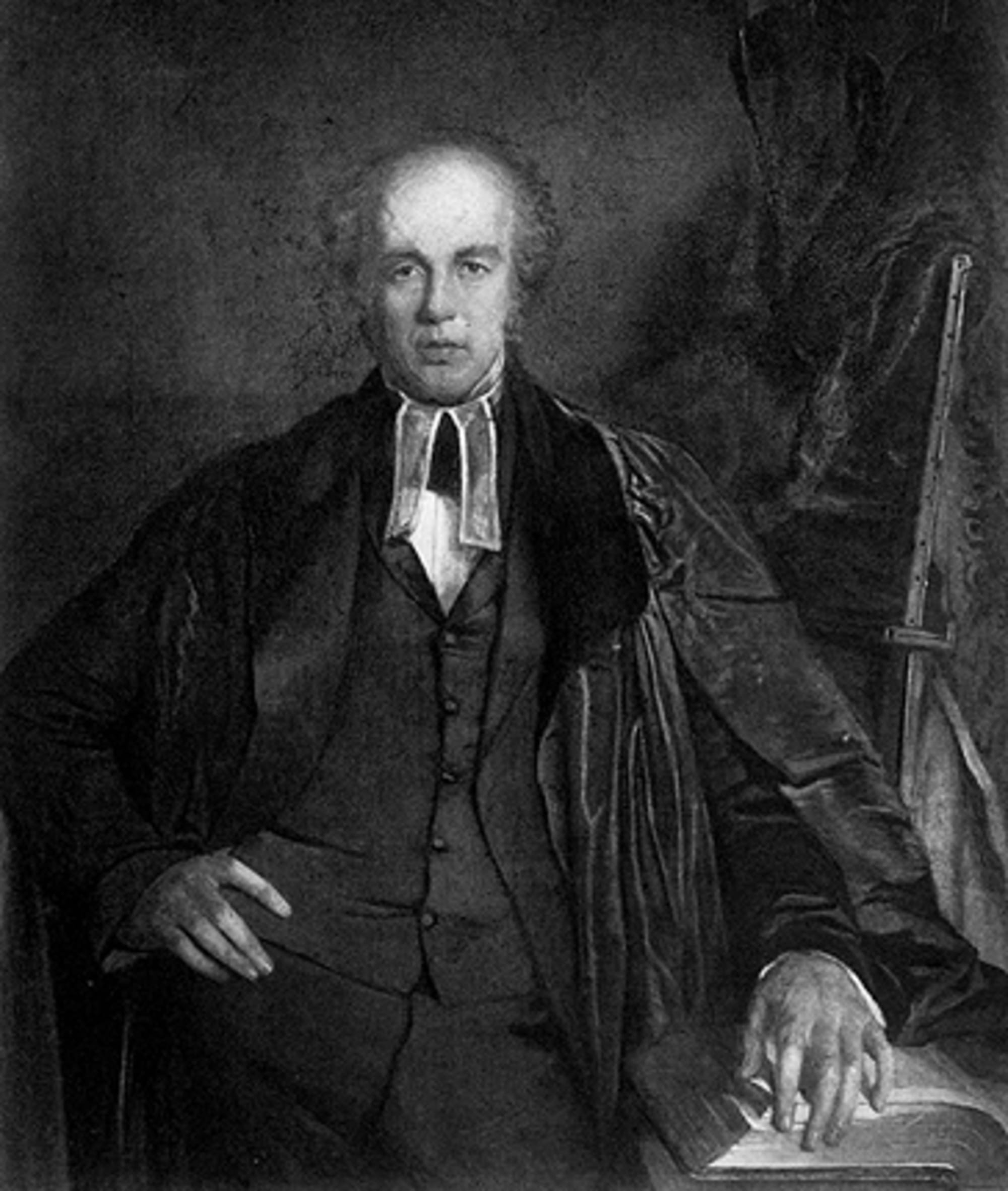
The Rev. John Thomson was born in the Manse at Dailly on 1st September 1778, descendant of James Thomson of Newton of Collessie and Weddersbie in Fife.
A Presbyterian heritage
John’s father, grandfather, great-grandfather, a cousin, and several other relatives through marriage were all Presbyterian Ministers.
Family origins
He was the youngest son of the Rev. Thomas Thomson by a second marriage to Mary Hay, widow of a Mr Lockhart.
A blended family
His father’s first marriage was to Peggy Hope, daughter of Sir Alexander Hope, and they had issue of a daughter, Margaret, who later married her cousin James Thomson, Minister in Girvan. Her mother, Peggy Hope, died a month after giving birth to a son, Thomas, who died in infancy.
Early education in Dailly
Young John Thomson attended school at Dailly, which was at that time situated within the churchyard just beyond the present main gateway and was described as
“little better than a shed with a thatched roof and the plainest of furniture”.
A classical foundation
It was here under the guidance of Dominie James Welsh that John, like all other children from Dailly, was instructed in English, French, Latin, writing, arithmetic, and bookkeeping.
A scholar's foundation
John was later taught Greek and Latin by his elder brother Thomas who was to become one of Scotland’s leading Advocates.
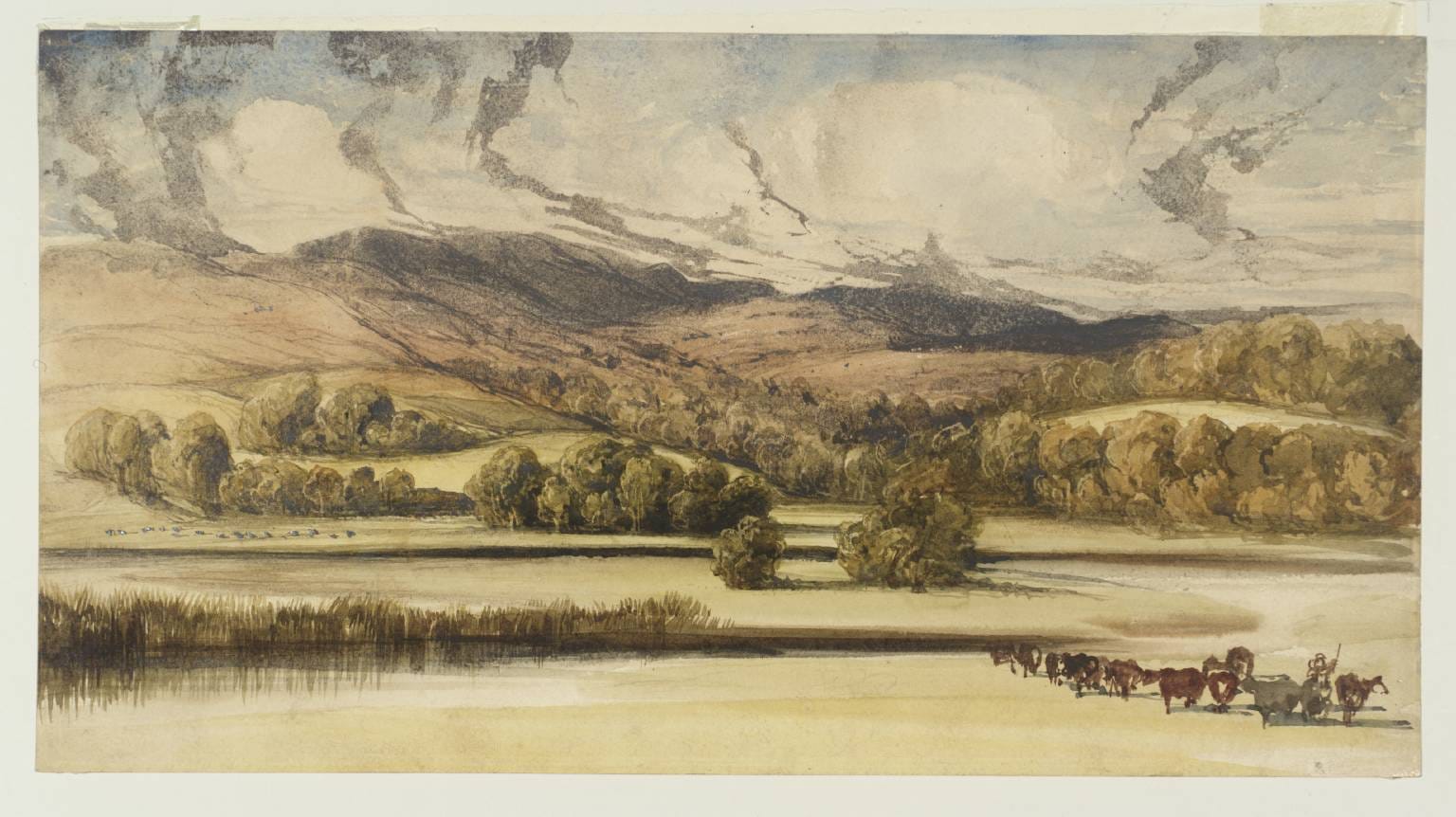
During his early years John had also become proficient in Astronomy, Geology, Optics and Chemistry and was a great lover of nature, often leaving his home at the Manse at 2am to climb Kirkhill or Hadyard Hill just to watch the sunrise.
First steps in art
As a young boy John often visited Tom McMurtie the village carpenter who resided in Rone Cottage near to the Manse, and he was instructed by the carpenter in the rudiments of painting.
On one of John’s visits to the workshop, McMurtie had just completed a chest for a parishioner about to emigrate to America, and Johnny, or Jock as he was called by his brothers and sisters, was invited to decorate the chest.
On its lid he painted a yellow bunting, and so it came about that he got his first commission to paint.
University years and notable connections
In 1791 at fourteen years of age, John was shipped off to Glasgow University and in November 1793 he was entered at the University of Edinburgh to continue his study for the Ministry.
Whilst in Edinburgh he lodged with his brothers Thomas and Adam and it was during this period that he became acquainted with many persons who later rose to eminence, amongst them Walter Scott a friend of his brother Thomas.
During his last month in Edinburgh, John took lessons under Alexander Nasmyth, the celebrated Scottish Landscapist.
Called to ministry
On 17th July 1799, John Thomson was licensed by the Presbytery of Ayr as a preacher of the Gospel.
His father had died on 19th February the previous year, and a strong influence was brought to bear on the Crown, with whom lay the patronage of Dailly, and he was presented by George III to his father’s place as Minister of Dailly, his ordination took place on 24th April 1800.
Family life and legacy
Within twelve months of his ordination, John married Isabella, daughter of the Rev. John Ramsay, Minister of Kirkmichael, who bore him two sons and three daughters.
Their eldest son, Thomas, became a physician and was for some time Mayor of Stratford-upon-Avon.
The youngest son, John, attained the rank of Captain in the Royal Navy and later served in the East India Company Maritime Service.
Isabella, the youngest daughter, married the celebrated Scottish artist Robert Scott Lauder RSA.
Click here to learn more about the origins of "We’re a’ Jock Tamson’s bairns!"
William Bell Scott and Penkill Castle
A Pre-Raphaelite connection
A more famous artist, William Bell Scott, is also associated with Dailly.
A Pre-Raphaelite painter, he first visited Penkill Castle near Girvan in 1860.
Love and art intertwined
He fell in love with his pupil and mistress, Alice Boyd, and was besotted with Penkill, her ancestral home.
Complex romantic liaisons occurred there until Scott's death in 1890.
Literary inspiration
Dante Gabriel Rossetti, the Italian poet and painter, visited Penkill in 1868 and was inspired to write poetry in Carrick.